About Tyre Pyrolysis Plant
Tyre Pyrolysis Plant Description
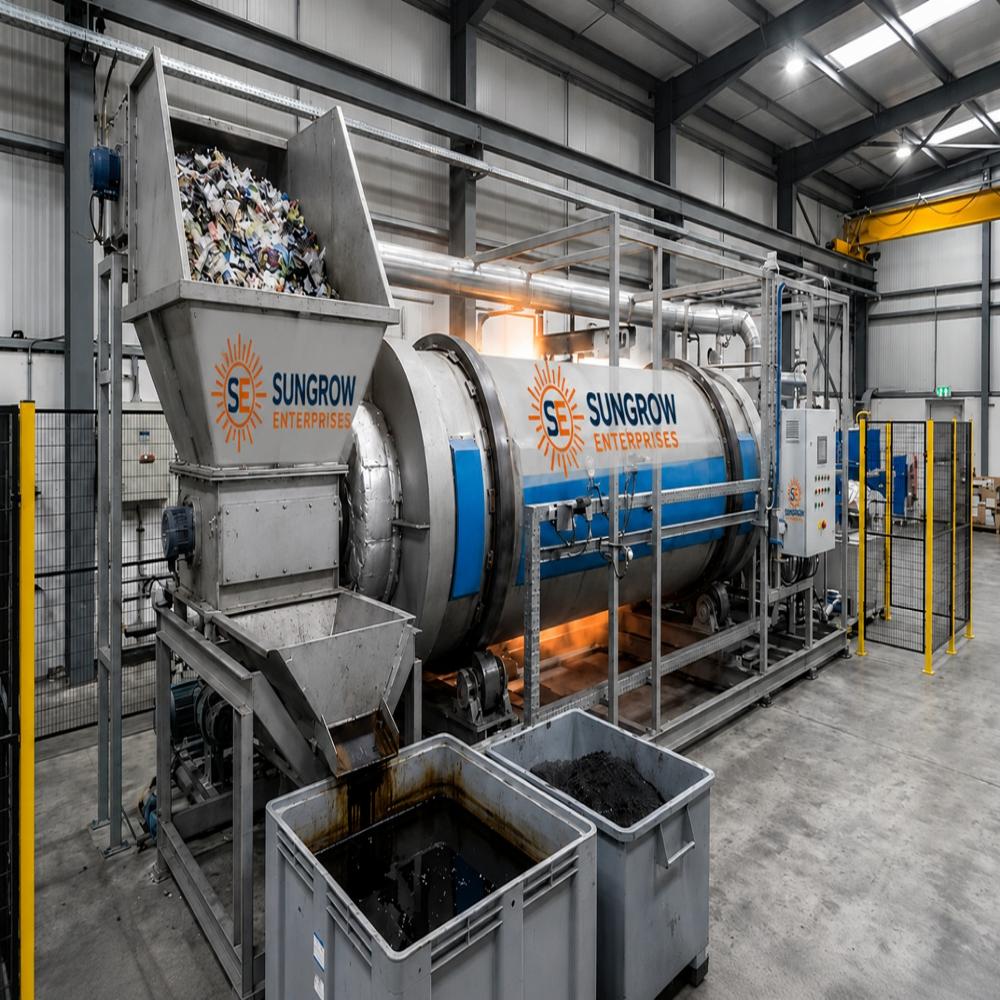
A Tyre Pyrolysis Plant is an industrial recycling system that converts waste tyres into valuable products such as Tyre Pyrolysis Oil (TPO), Recovered Carbon Black (rCB), Steel Wire, and Fuel Gas by heating the tyres in an oxygen-free reactor. The recovered fuel gas is reused to heat the reactor after start-up, improving energy efficiency and reducing operating costs.
Working Process
Waste tyre feeding
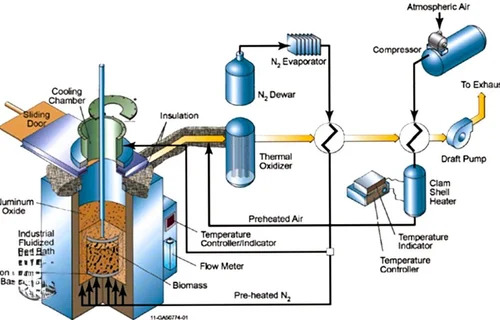
Oxygen-free heating inside the reactor (400500C)
Thermal decomposition (Pyrolysis)
Oil vapour condensation
Tyre Pyrolysis Oil collection
Fuel gas recovery and reuse
Carbon black discharge
Steel wire separation
Flue gas scrubbing and safe emission
Main Equipment
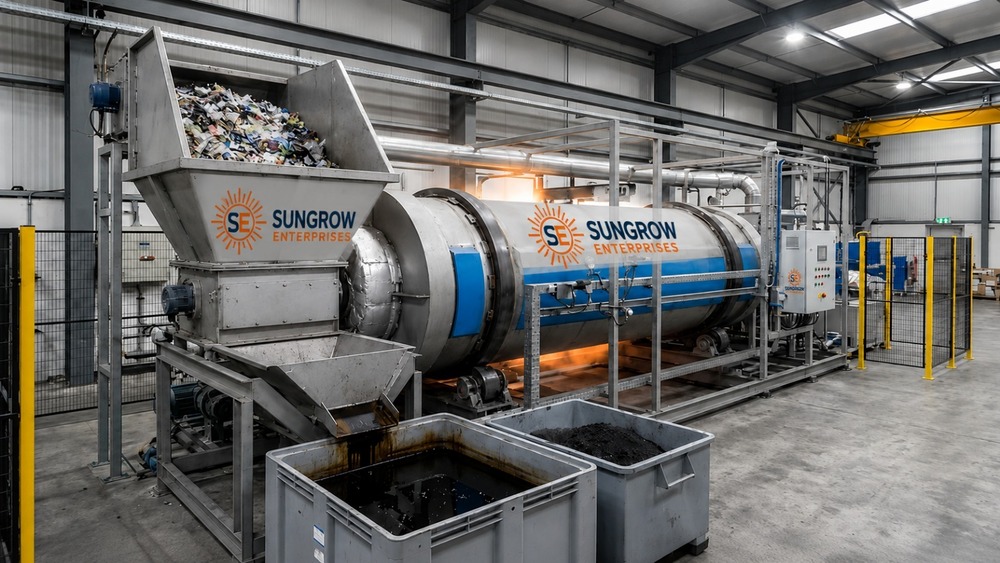
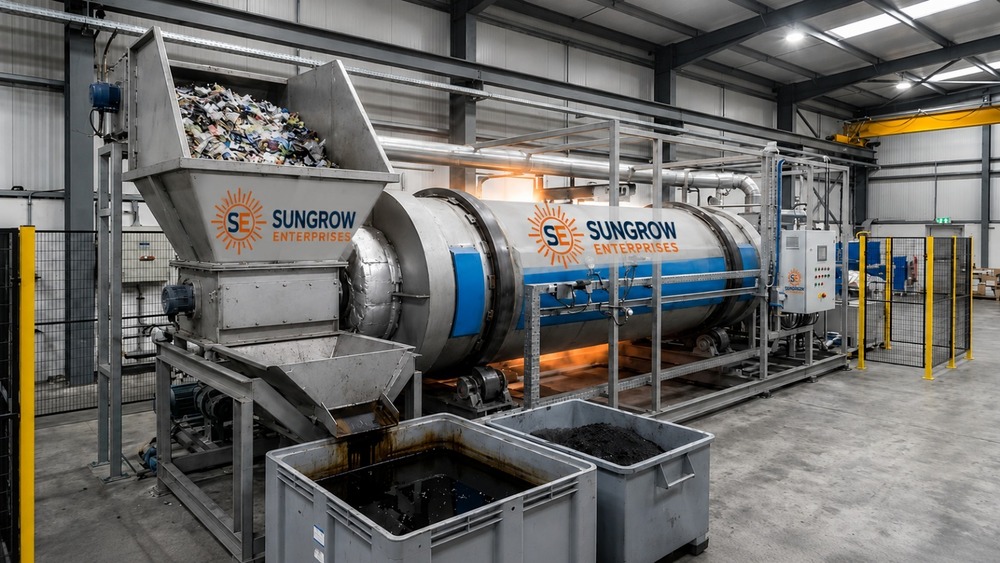
Tyre Feeding System
Rotary Pyrolysis Reactor
Heating Furnace with Gas Burners
Shell & Tube Condenser
Oil-Gas Separator
Tyre Pyrolysis Oil Storage Tank
Fuel Gas Filter & Gas Storage Tank
Carbon Black Collection System
Steel Wire Discharge System
Cooling Tower & Water Circulation System
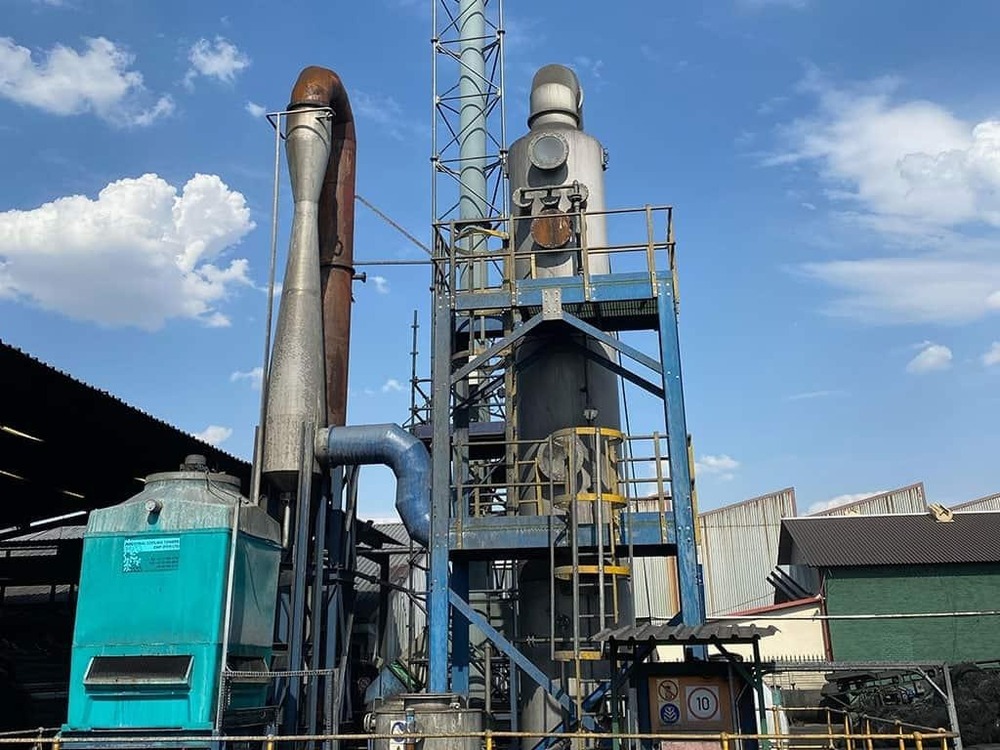
Flue Gas Scrubber
Chimney (1520 m)
PLC/SCADA Control Panel
Supporting Structure & Walkway Platform
Typical Technical Specifications (12 TPD Plant)
ParameterSpecification
Plant Capacity12 TPD
Reactor TypeRotary Batch / Continuous
Operating Temperature400500C
Reactor Diameter22002600 mm
Reactor Length820 Meter (depending on design)
Heating FuelPyrolysis Gas / PNG / LPG (Start-up)
Installed Power50120 kW
Cooling SystemClosed Loop Water Cooling
OperationPLC/SCADA Automatic
Typical Product Yield
Tyre Pyrolysis Oil: 4045%
Recovered Carbon Black (rCB): 3035%
Steel Wire: 1015%
Fuel Gas: 812%
(Actual yield depends on tyre quality and process conditions.)
Advantages
High oil recovery
Fuel gas reused for heating
Recovery of valuable steel wire
Low operating cost
Fully automatic PLC operation
Suitable for commercial tyre recycling
Environment-friendly with proper pollution control systems
Applications
Waste Tyre Recycling
Tyre Pyrolysis Oil Production
Recovered Carbon Black Manufacturing
Steel Wire Recovery
Industrial Fuel Production
Waste-to-Energy Projects
Efficient Tyre Recycling for Industrial NeedsThe TPP2024 Tyre Pyrolysis Plant is tailored for the recycling of used tyres and rubber waste, turning them into valuable resources such as pyrolysis oil, carbon black, and recovered steel. Its high conversion rate and modern safety features make it ideal for industries seeking sustainable waste management and renewable fuel production.
Advanced Reactor and Cooling TechnologyFeaturing a horizontal rotary reactor and water circulation cooling system, the plant ensures uniform heat distribution and effective condensation of oil vapors. Automated controls, energy-efficient design, and emission treatment systems guarantee compliance with environmental standards and seamless operation throughout the recycling process.
Comprehensive Support and CustomizationBeyond installation and commissioning, our team provides training, foundation guidance, annual maintenance contracts (AMC), and ongoing technical support. Plant configurations, capacities, and colors can be customized as per client requirements, ensuring the TPP2024 model adapts to various industrial applications and site conditions.
FAQ's of tyre pyrolysis plant:
Q: How does the tyre pyrolysis process work in the TPP2024 plant?
A: Shredded or whole tyres are fed into a horizontal rotary reactor, where they are heated to 350C-450C in an oxygen-free environment. This breaks down the tyres into oil, carbon black, steel wire, and combustible gas. The oil vapors are cooled through a water circulation system, while any steel and carbon black are separately extracted for recovery.
Q: What feedstock types are suitable for this pyrolysis plant?
A: The TPP2024 plant accommodates both whole and shredded tyres, as well as other rubber materials, for flexible waste tyre recycling and oil recovery. The quality and preparation of the feedstock influence oil yield, which can range between 35% and 45%.
Q: When should the plant be operated in batch versus continuous mode?
A: Choose batch operation for occasional processing or smaller volumes, ideal for facilities with intermittent tyre waste. Opt for continuous mode in settings with a steady, high-volume supply of tyres, so the plant runs for longer durations, maximizing efficiency and output.
Q: Where can the TPP2024 Tyre Pyrolysis Plant be installed?
A: Installation is suitable at industrial sites with proper foundation and electrical infrastructure (415 V, 50 Hz). A location with efficient waste collection and access to utilities like water for cooling and preferred fuel sources (pyrolysis gas, coal, etc.) is recommended for optimal operation.
Q: What are the key benefits of using this tyre pyrolysis system?
A: The plant boasts high oil yield, eco-friendly and safe operation with low emissions, energy efficiency, robust construction, and advanced automation. It generates valuable by-products and supports sustainable recycling, while complying with environmental standards and offering reduced operational noise.
Q: How is emission control managed during operation?
A: Exhaust gases pass through a cyclone separator followed by a scrubber, ensuring particulates and pollutants are removed to meet environmental compliance. The plant design guarantees low emissions, with built-in safety mechanisms like automatic pressure relief valves and overtemperature alarms.
Q: What after-sales support and maintenance services are provided?
A: Comprehensive after-sales support includes on-site installation, commissioning, operator training, and annual maintenance contracts (AMC). Technical experts help set up the foundation, optimize plant operation, and provide ongoing service to extend the plant's design life of 15-20 years.




 Send Inquiry





 Send Inquiry
 Send Inquiry
 Send SMS
 Call Me Free


